Lembang is not one attraction. It is a strip of highland about forty minutes north of Bandung, spread along a single road that climbs from Setiabudi up toward Tangkuban Parahu and then on to Subang. Farms, pine forest, markets, and a dozen paid attractions sit off that road, and the way people visit them — in what order, at what hour — decides whether the day feels easy or exhausting.
This page is the overview: what the area is, how the pieces fit together, and how a driver turns a list of names into a route that works.
What Lembang is, and where it sits
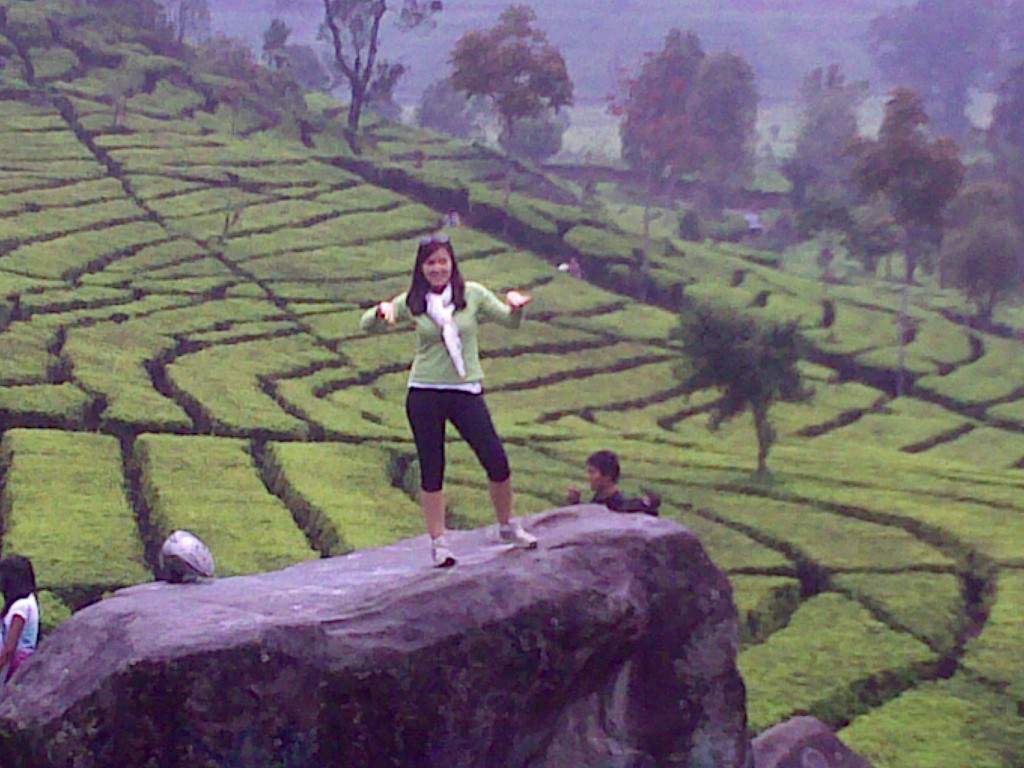
The district sits on the northern slope of Tangkuban Parahu, high enough that mornings are cold and the vegetables sold in Bandung are grown on the terraces around it. The main road is the only practical way in and out, which is why a Saturday morning can turn a fifteen-kilometre drive into an hour.
Attractions along the strip include Tangkuban Parahu, Sari Ater further up toward Ciater, Lodge Maribaya, Farm House, the Floating Market, De Ranch, and Dusun Bambu, with Cihampelas Walk and Jalan Riau waiting back down in the city. Some are ten minutes apart; some are half an hour. A driver who knows the order saves you from doubling back.
What a driver actually changes about a Lembang day
- Parking. The popular stops have small car parks that fill by mid-morning. A driver drops you at the gate and parks elsewhere rather than circling.
- Order. The difference between a good day and a bad one is usually sequence: crater first, paid attractions second, forest and dinner last.
- Weather calls. When the cloud drops on the crater, the driver knows to swap it with a lower stop and come back up.
- Cold starts. An air-conditioned car waiting at the hotel door at 07:30 is worth more in Lembang than anywhere else in Bandung.
- Local knowledge. Which warung is open early, which route avoids the Lembang market jam, where the road narrows to one lane.
- Luggage. If you are heading to the airport afterwards, the car carries everything while you walk.
A sensible shape for a Lembang day
The times below are the pattern we fall into most often. Exact stops change with the weather and with what you want to see, but the shape — high and early, low and late — rarely does.
- 07:30 — Leave the hotel. The Setiabudi climb is clear at this hour and stays clear for about ninety minutes.
- 08:15 — Cikole pine forest, for a walk among the tall trees while the air is still sharp and the light comes through sideways.
- 09:30 — The Lembang market area, where the vegetable stalls and flower sellers are busiest and the prices are local.
- 10:45 — The Maribaya forest and waterfall, where the trail is shaded and quiet before lunch.
- 12:15 — Lunch at a Sundanese restaurant on the main road, or a bowl of noodles at the market.
- 13:30 — Tangkuban Parahu if the sky is clear; if it is not, keep it for another day and go lower instead.
- 15:30 — Down the western side toward Dusun Bambu or Stone Garden on the Padalarang road.
- 17:30 — Back in the city, or dinner up on Punclut if the group still has energy.
The other clusters people confuse with Lembang
Guests often arrive with a list that mixes three different parts of the regency. They are not close to each other, and trying to do two clusters in one day is the most common planning mistake we see.
- Ciwidey, in the south — Kawah Putih, Situ Patenggang, Ranca Upas, the Rancabali tea plantations, strawberry farms, and Kawah Rengganis. A separate day from Lembang, not an afternoon add-on.
- Padalarang, to the west — Goa Pawon, Stone Garden, the Tebing Gunung Hawu cliff, Dusun Bambu, and the Cimahi waterfall area. This one can share a day with Lembang because it sits on the return road.
- Malabar, to the south-east — the Malabar tea plantation and the Situ Cileunca area for rafting and outbound activities. Again, its own day.
Cost and how booking works
We do not publish a single rate for Lembang, because the price depends on the vehicle, the number of hours, and whether you are adding a second cluster such as Padalarang. Rates are confirmed on WhatsApp before you commit, and they include the car, driver, petrol, toll, parking, and the driver’s meal.
Vehicles run from an Avanza for up to five passengers, through an Innova Reborn for comfort on the climb, to a HiAce Commuter for a group. Entrance tickets are paid at each gate and vary between weekdays and weekends.
When to come, and what to wear
- Weekday mornings are the calmest window. Weekends are busy from about nine onward, and public holidays busier still.
- Bring a jacket. Lembang at dawn is cold by Indonesian standards, and the crater rim is colder.
- Avoid the rain months for crater plans. December to February afternoons are wet, and the mountain disappears into cloud without warning.
- Carry small notes for parking attendants, market stalls, and the roadside stops that make the day memorable.
Frequently asked questions
Roughly forty minutes from the city centre along Jalan Setiabudi. On a Sunday morning it can take twice that, which is why we suggest leaving before eight.
Technically possible, practically unpleasant. The two areas are on opposite sides of the city, and the drive between them crosses Bandung twice. Choose one and give it the day.
You can use the angkot and the odd ride-hailing car, but the attractions are spread along a congested road and the waiting time adds up. A driver for the day usually costs less than the alternative.
Plan your Lembang day with us
Tell us what you want to see, how many of you there are, and how long you have. We will suggest a route that fits and confirm the rate on WhatsApp: +62 813-940-333-63.
Email reaches us at [email protected] if that is easier for you.
Related services
- Bandung to Lembang private driver — the direct transfer, without a full-day package.
- Paragliding in Lembang — the valley from the air, for the adventurous half of the family.
- Two-day family itinerary in Bandung — how to split Lembang and the city across two days.
- Bandung car rental with driver — vehicles and daily rates for every route.